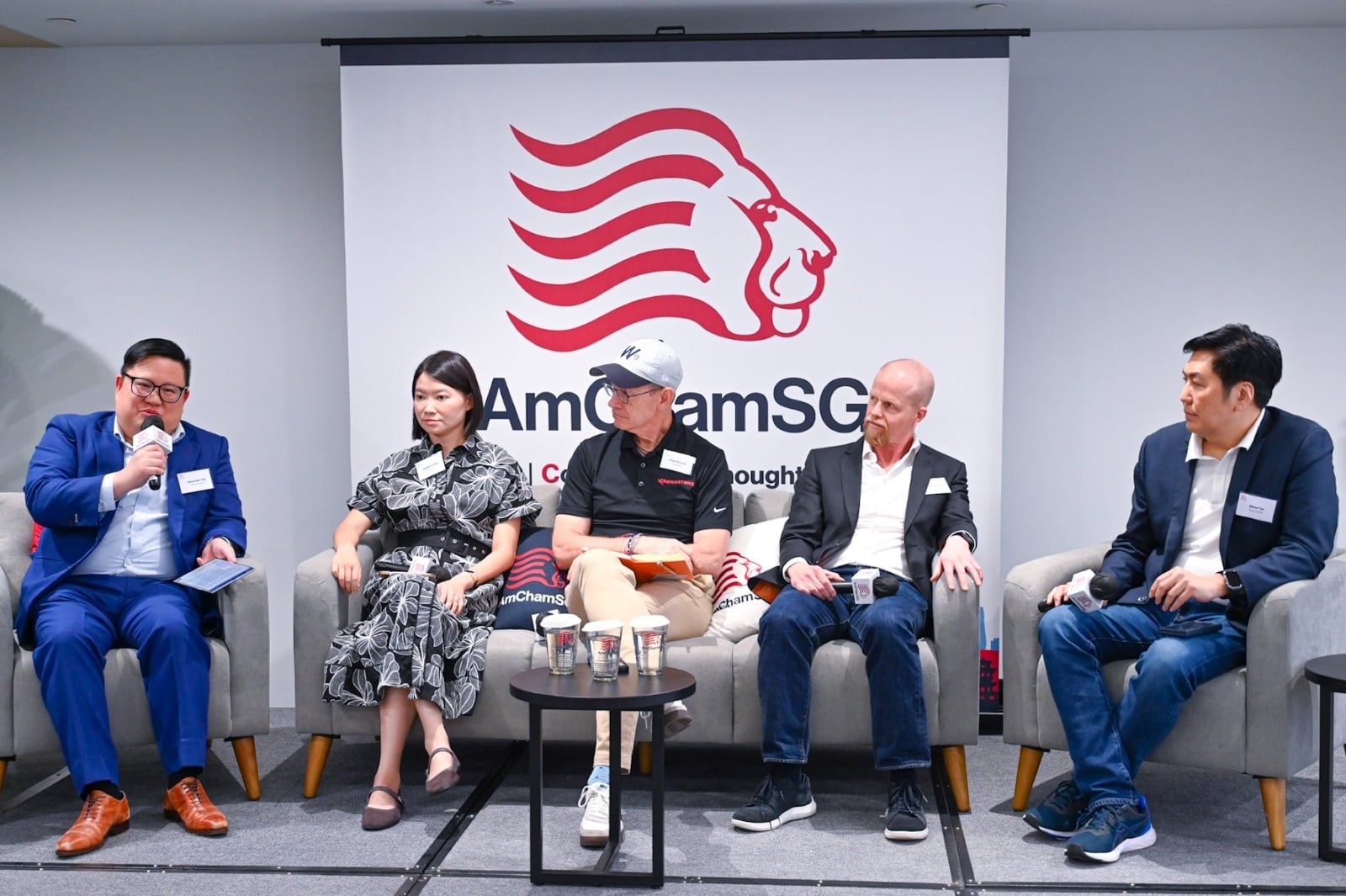
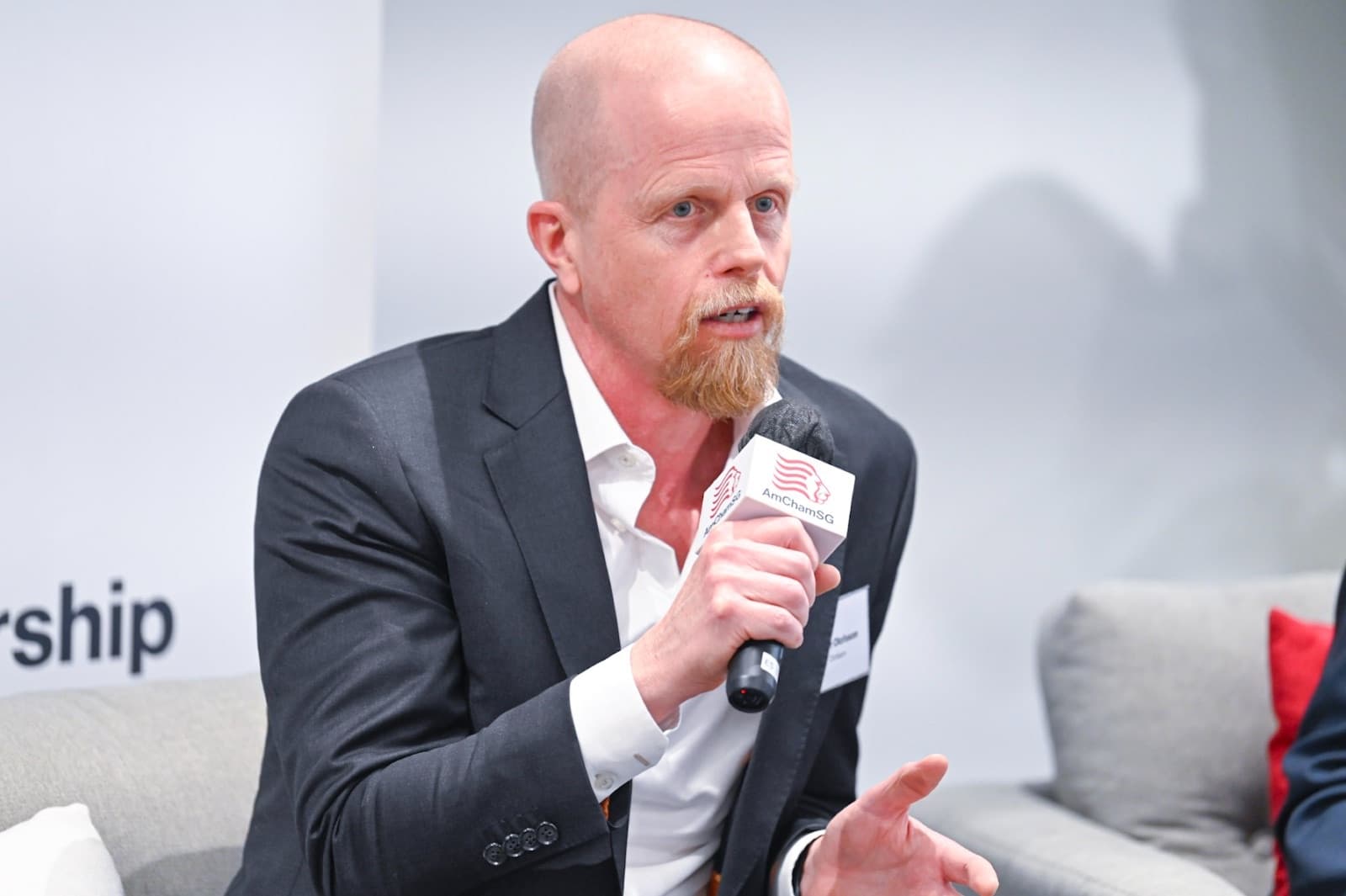
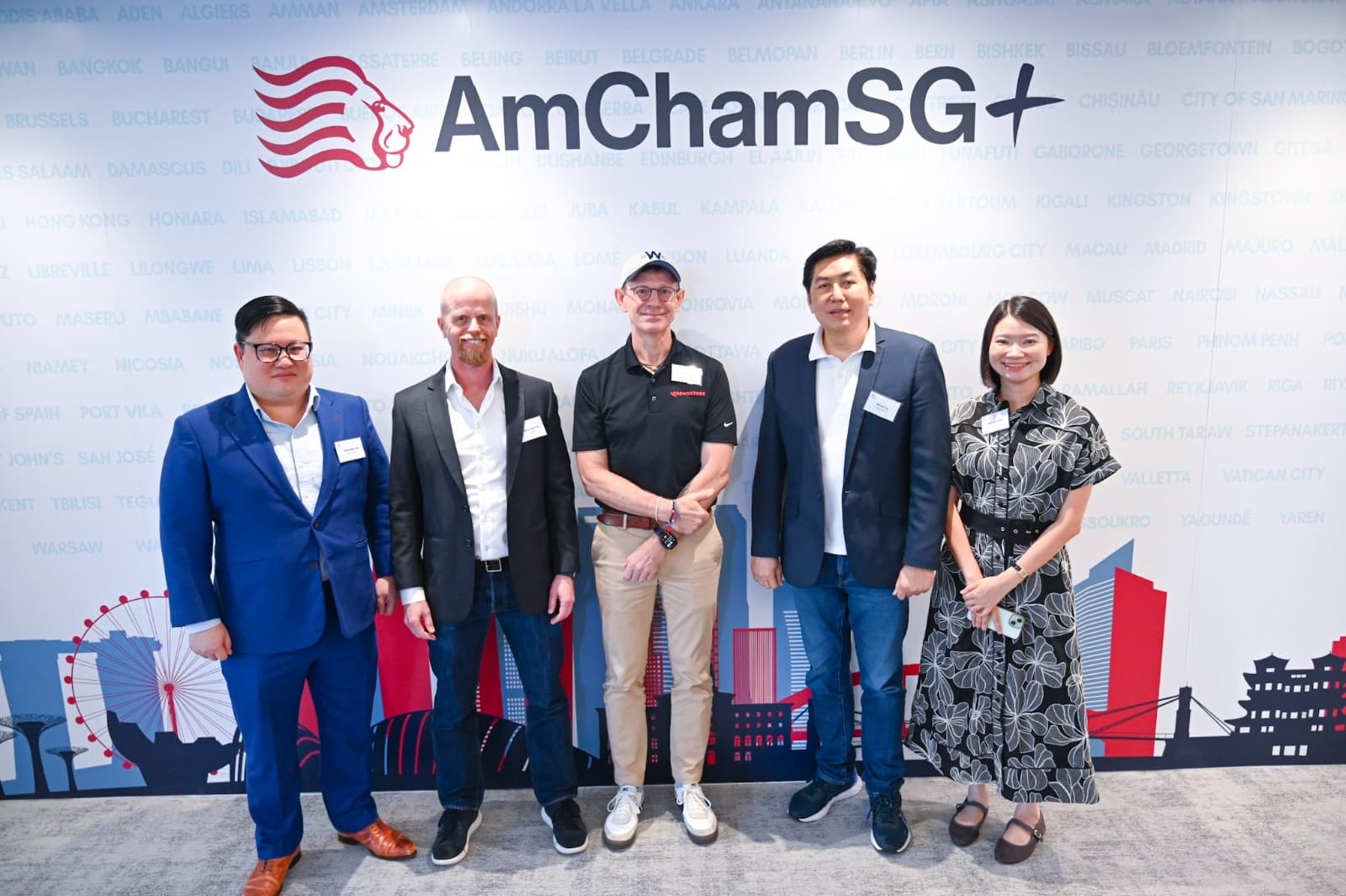
In April 2026, Anthropic built its most capable model to date and then chose not to ship it. Mythos went to a small set of named partners; everyone else was locked out. That single decision is what the AmChamSG AI Advantage panel came to examine, and our CEO Roger Olofsson joined speakers from CrowdStrike, Microsoft, Cisco, and Allen & Gledhill to work through it. Roger's argument was that a curated frontier is a reason to move faster, not slower: build AI into the workflow, design for multiple models rather than one, and bring in credible security partners to cover what you cannot cover yourself.
Why a model that was never released mattered so much
This was the first time a frontier lab openly said it had built something and would not release it. Mythos sits with around fifty named partners while the rest of the market waits. The panel's starting question was what that does to a company that is not on the list. Capability stops being something you buy and starts being something you are granted, and that shifts the competitive question from budget to relationships, trust, and the credibility of your own security and governance posture.
Build AI into the workflow, and design for more than one model
Roger's first point was the least glamorous and the most load-bearing: the advantage does not come from having access to a model, it comes from having AI built into how the work is actually done. The second followed from Mythos itself. As governments take a larger role in how frontier models are released and to whom, the model you are permitted to use in a given market, for a given client, or under a given contract can change without warning. Systems built around a single provider inherit that fragility. Multi-model capability, the ability to swap the engine underneath without rebuilding the product, is no longer an architectural nicety. It is how you stay operational when access is granted rather than bought.
The risk is real. The answer is not to slow down
The uncomfortable part of Mythos is that the same capability that finds vulnerabilities at scale can exploit them at scale. Roger did not argue the risk away. He called it significant and unprecedented. His argument was that the transformative potential of AI is larger still, and that the correct response is to keep investing in transforming the business rather than to hesitate. What changes is who you do it with. Securing an AI-native environment is beyond what most companies can build in-house, and it does not have to be built in-house: you engage credible partners with genuine cyber capability, the CrowdStrikes and Ciscos of the ecosystem, to secure what you are building. Partnering there is not an admission of weakness; it is what makes moving fast survivable.
Speed is the strategy for mid-sized firms
The sharpest version of Roger's case was aimed at mid-sized professional services companies, where the instinct to wait for the risk picture to clarify is strongest. You cannot slow down on AI, because the firms that do not will pull away. For a company of that size, deploying AI at speed is the only route to a sustainable competitive advantage. The scale advantages of the large incumbents are not available to you, but the speed advantage is. The cybersecurity exposure that comes with it may sit outside your capability. That is an argument for engaging the people whose capability it is, not for going slower.
What this means for hiring
Every scenario on that stage resolves into a hiring problem: partner access, multi-model architecture, autonomous defence, regulated deployment. Building AI into the workflow, keeping the model layer swappable, and holding the security line while doing both requires leaders who can carry technical depth and governance credibility at once, and there are not many of them. This is exactly the search we run through the Olofsson AI Lab and our AI-powered talent engine, which lets us map, assess, and reach that thin layer of the market far faster than a keyword search ever could.